
Reciprocating air and nitrogen boosters
Piston boosters, fixed or variable speed, for high pressure duties.
Technical data
- Free air delivery
- 0.9 – 7.8 m³/min
- Working pressure
- 45 bar g
- Motor power
- 11 – 75 kW
- Weight
- 720 – 2,450 kg
- Noise level
- 80 – 86 dB(A)
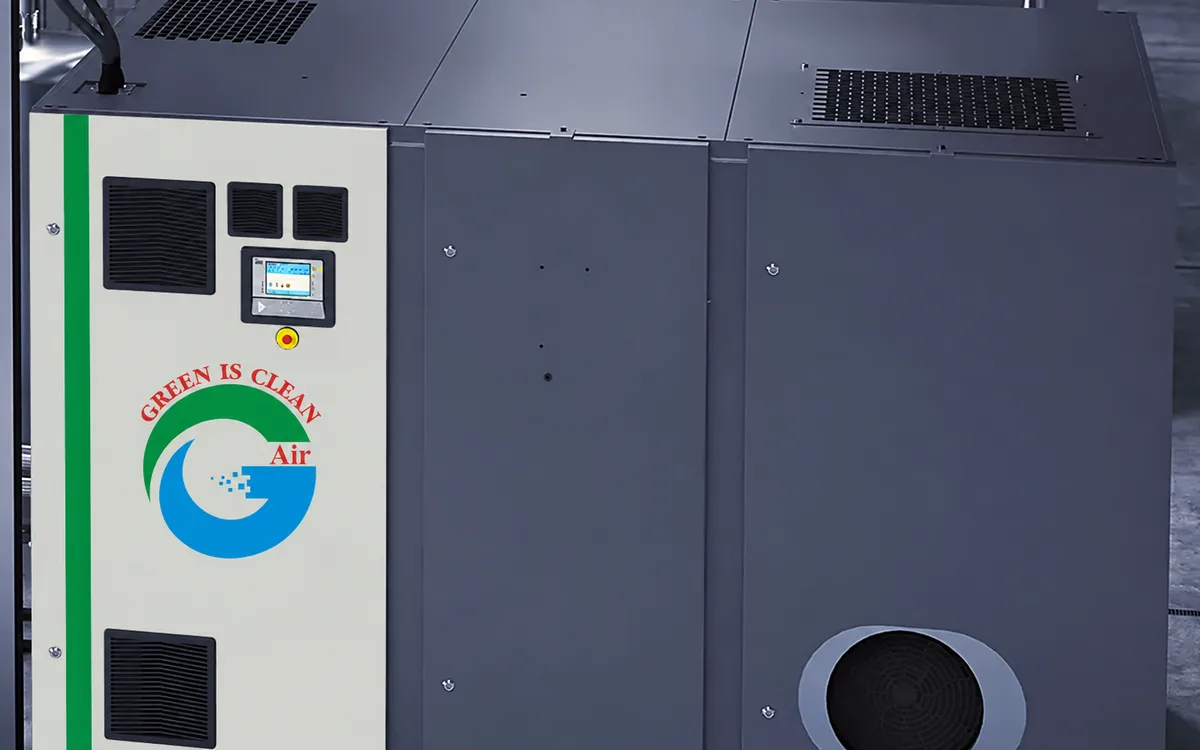
Overview
Where the required outlet pressure is high and the flow is moderate, a reciprocating booster is the right machine. Multi-stage piston compression handles pressure ratios that a screw machine cannot reach.
Both fixed-speed and variable-speed versions are available. The variable-speed version is worth specifying wherever demand is intermittent: for example a blow-moulding line that changes bottle format through the day.
Key benefits
High pressure ratios
Multi-stage piston design reaches outlet pressures that rotary machines cannot.
Variable speed available
Matches output to a changing demand instead of unloading and recompressing.
Oil-free gas path
Non-lubricated cylinders keep the delivered gas clean.
Serviceable in place
Valves, rings and packings are replaceable on site without removing the machine.
How it is built
A piston and a cylinder, which is the oldest way of compressing gas and still the most direct way to reach a high pressure from a modest inlet.
Multiple stages with cooling between them keep the discharge temperature of each stage inside what the valves and rings can live with. The intercoolers are therefore not an accessory, they are what makes the machine last.
These machines are built to be rebuilt. Valves, rings, liners and packings are all replaceable items with published intervals, which is why a well kept reciprocating booster stays in service for decades.
- Multi stage piston compression
- Intercooling between every stage
- Built to be rebuilt rather than replaced
- Published intervals for every wear part
- Air or nitrogen service
- Air cooled or water cooled
- Skid mounted or packaged
- Relief and isolation to the applicable standard
What the controller does
Interstage pressures are the diagnostic on a reciprocating machine. When one stage loses valve condition the pressure between stages moves, and that shows on the panel before output does.
The machine stops on the receiver rather than cycling against a valve, and it counts starts as well as hours, because start count is what wears a motor of this type.
Discharge temperature per stage is alarmed and trended. On a piston machine it is the earliest honest warning of a valve on the way out.
- Interstage pressures shown and trended
- Discharge temperature per stage
- Start counting as well as hour counting
- Receiver control rather than valve cycling
- Service countdown per wear item
- Fault history kept on the machine
- Volt free contacts for plant alarms
- Remote monitoring available
Parts and service kits
Valves first, then rings and packings, then liners. The intervals are published and the parts are stocked, and a machine kept to that list will outlive most of the plant around it.
The most expensive mistake on a reciprocating booster is running a tired valve. It costs power immediately and it puts heat into the next stage, which then costs another set of parts.
We record flow at pressure and interstage pressures at every service, so the record shows whether the machine is still doing what it did when it was new.
- Valve kits at the published interval
- Ring and packing kits by interval
- Liner replacement on condition
- Interstage pressures recorded at every service
- Flow at pressure recorded at every service
- Different kits for air and nitrogen
- Confirmed against your serial number
- Fixed price under a service plan
Model range
- up to 45 bar g
- 0.9 m³/min
- Noise level
- 80 dB(A)
- Weight
- 720 kg
- Dimensions L x W x H
- 1,500 × 850 × 1,350 mm
- up to 45 bar g
- 2.0 m³/min
- Noise level
- 82 dB(A)
- Weight
- 1,150 kg
- Dimensions L x W x H
- 1,800 × 950 × 1,450 mm
- up to 45 bar g
- 4.4 m³/min
- Noise level
- 84 dB(A)
- Weight
- 1,750 kg
- Dimensions L x W x H
- 2,200 × 1,150 × 1,650 mm
- up to 45 bar g
- 7.8 m³/min
- Noise level
- 86 dB(A)
- Weight
- 2,450 kg
- Dimensions L x W x H
- 2,600 × 1,350 × 1,850 mm
FAD measured to ISO 1217 Edition 4, Annex C and E at 1 bar a intake, 20°C, 0% humidity. Noise measured to ISO 2151 in free field conditions, tolerance ± 3 dB(A). Water-cooled versions of every model are available. Ask us for their sheet.
Frequently asked questions
Why is a reciprocating machine used for boosting?
Because piston compression handles high pressure ratios efficiently. Above roughly 15 bar it is the practical choice, and above 40 bar it is usually the only one.
How many stages does it need?
It depends on the ratio. Each stage handles a limited ratio before discharge temperature becomes the limit, so higher pressure means more stages and intercooling.
What is intercooling for?
Cooling the gas between stages. It lowers the work needed for the next stage and keeps discharge temperature within safe limits: it is efficiency and safety together.
Can it run continuously?
Many can, but duty cycle varies far more than with screw machines. We check the required duty before quoting rather than after installation.
What maintenance does it need?
Valves, piston rings and packing at planned intervals. Valves are the wear item and the commonest cause of lost capacity.
How do I know a valve is failing?
Rising interstage pressure or temperature, falling delivery, and a change in sound. Interstage gauges are the cheapest diagnostic you can fit.
Is it noisy?
Louder than a screw compressor and pulsating. Acoustic housing and pulsation dampers are usually part of the installation, not an extra.
Can it handle gases other than air?
Yes: nitrogen, and other gases with the right materials and sealing. Tell us the gas at enquiry, because it changes the whole specification.
What about foundations?
Reciprocating machines produce unbalanced forces. Larger units need a designed foundation, and we provide the loading data for your civil engineer.
How long do they last?
Decades, with valve and ring service. These are long-life machines and they reward a maintenance schedule more than almost anything else in a plant room.
Related products
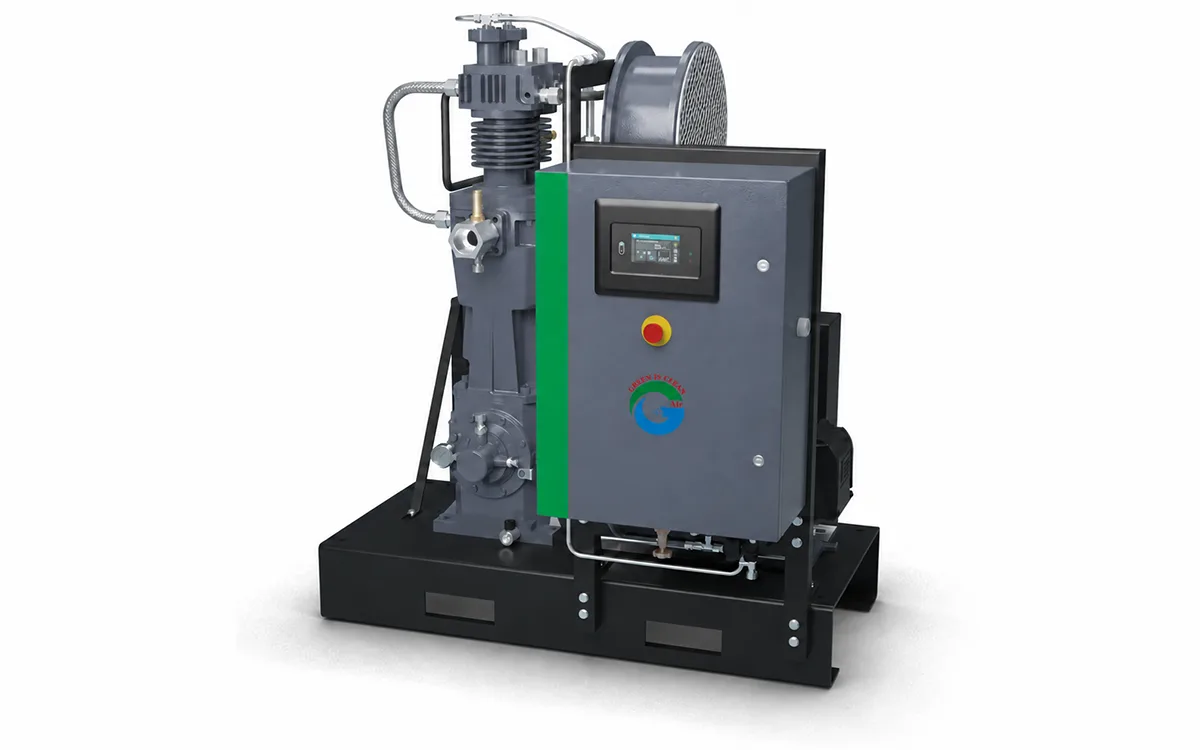
Oil-free air and nitrogen boosters
Take existing plant air or nitrogen up to high pressure, oil-free.
- Free air delivery
- 1.5 – 10.0 m³/min
- Working pressure
- 40 bar g
- Motor power
- 15 – 90 kW
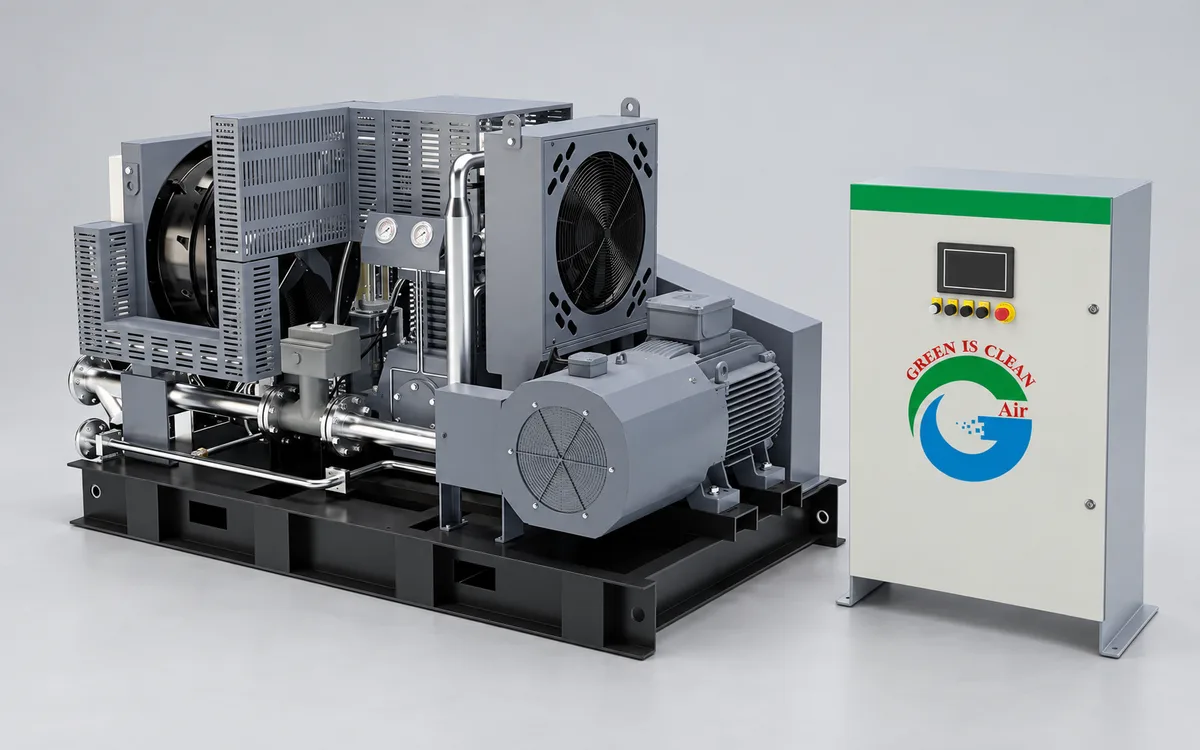
Oxygen boosters
Purpose-built, oxygen-clean boosters for medical and industrial O₂.
- Free air delivery
- 0.6 – 1.2 m³/min
- Working pressure
- 4 – 200 bar g
- Motor power
- 8 – 15 kW
Not sure which model you need?
Send us your air demand, working pressure and running hours. Our engineers will size the machine and send a written recommendation, no cost, no obligation.